God destroyed Sodom and Gomorrah at least in part due to the fact that the men of the city wanted to engage in same-sex behavior.
Sodom and Gomorrah addresses gang rape, not a loving relationship.
Genesis 19 · Ezekiel 16:49
God destroyed Sodom and Gomorrah at least in part due to the fact that the men of the city wanted to engage in same-sex behavior.
Sodom and Gomorrah addresses gang rape, not a loving relationship.
Genesis 19 · Ezekiel 16:49
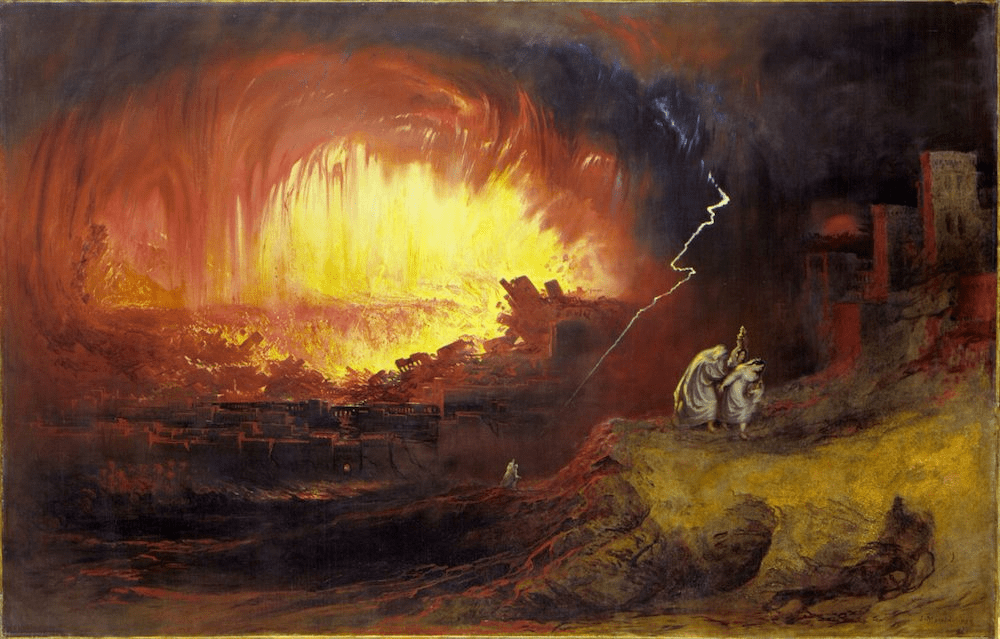
In Genesis 19, God sends two angels disguised as men to Sodom, where the men of Sodom threaten to rape them. God then destroys the city with fire and brimstone.
God had already decided to destroy the city prior to this incident.
The men's aggressive actions are preceded by lavish displays of hospitality from Abraham and Sarah (Genesis 18) and Lot (Genesis 19). These preceding accounts place the focus on the men of Sodom's violent, disgraceful treatment of strangers.
Same-sex rape was a common tactic of aggression and humiliation in the ancient world. Gang rape is completely different from loving relationships based on consent, much less mutuality and commitment.
A parallel story in Judges 19 shows that the men of Sodom's actions were not connected to sexual orientation.
In Judges 19, a Levite and his concubine rest from their travels in the city of Gibeah (in the tribe of Benjamin). A foreigner living in Gibeah offers them hospitality, but "some of the wicked men of the city surrounded the house" and said, "Bring out the man who came to your house so we can have sex with him" (Judges 19:22).
The owner said, "No, my friends, don't be so vile. Since this man is my guest, don't do this outrageous thing. Look, here is my virgin daughter, and his concubine. I will bring them out to you now, and you can use them and do to them whatever you wish" (Judges 19:23–24).
Horrifically, the men rape the man's concubine to death. Their threat was to rape, and possibly kill — not to have any kind of romantic encounter.
There are more than 20 references to Sodom and Gomorrah in Scripture after Genesis 19. Only two of them mention sexual sins at all — and out of all of those references, none mention same-sex behavior as even part of the reason for Sodom's destruction.
Each of the three passages most often cited, examined in context:
"They were haughty and did an abomination before me." The word "abomination" (toevah) is used 117 times in the Old Testament; 111 of those uses have no connection to same-sex behavior. Even if one interprets this term as a reference to male same-sex relations, the type of behavior involved would be a threatened gang rape.
Says Lot was "greatly distressed by the sensual conduct of the wicked." This phrase is not a specific reference to same-sex behavior.
Says Sodom "gave themselves up to sexual immorality and perversion." It literally means "different flesh" (sarkos heteras) — likely a reference to the attempted rape of angels, given that Jude 6 refers to the Nephilim, "the angels who did not keep their positions of authority."
No. That was not the original interpretation of the Sodom story, which dates back to the 14th century BC.
Isaiah 1 equates the sin of Sodom with oppressing marginalized groups, murder, and theft. Jeremiah 23:14 links it with adultery, idolatry, and power abuses. Amos 4:1–11 and Zephaniah 2:8–11 compare it to the oppression of the poor, as well as prideful and mocking behavior.
Other Jewish writings say God loathed the people of Sodom "on account of their arrogance" (Sirach 16:8) and punished them "for having received strangers with hostility" (Wisdom 19:15).
The Sodom story is recorded. The earliest readers understood it as a parable about inhospitality, arrogance, and violence — not same-sex behavior.
The first Jewish literature to connect Sodom's sin to same-sex behavior specifically. No earlier Jewish source makes this connection.
The same-sex reading becomes the mainstream interpretation among Christians — roughly 400 years after Jesus, and 1,700 years after the story was written.
The word is coined — and even then, it was widely used to refer to all non-procreative sexual acts (including heterosexual acts), not same-sex relations specifically.
Matthew Vines traces the full history of how the Sodom story has been read — and why the same-sex interpretation is a late development that doesn't survive contact with the biblical text itself. Available wherever books are sold.
Find the book →The Bible never teaches that same-sex behavior was even part of Sodom's sin.