05
Argument 05 of 10  ·  Redemptive Movement

The arc of Scripture points toward inclusion, not exclusion.

Scripture & Hermeneutics
Non-affirming claim

Scripture was countercultural in its rejection of same-sex relationships, so Christians today should be countercultural by rejecting them as well.

Affirming response

The arc of Scripture points toward inclusion, not exclusion.

Scripture & Hermeneutics
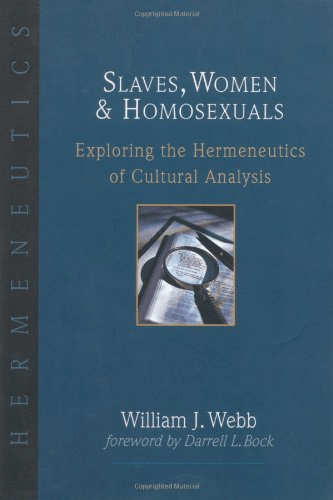
In his 2001 book Slaves, Women, and Homosexuals, New Testament professor William Webb popularized the phrase "redemptive-movement hermeneutic" to describe a widely-used approach to Scripture.

Slaves, Women, and Homosexuals — William Webb
Referenced Work
Slaves, Women, and Homosexuals — William J. Webb
The book that popularized the "redemptive-movement hermeneutic" — and whose conclusions on same-sex relationships we address below.
  • Webb argued that Christians should consider the words of Scripture in the broader context of the direction Scripture moves relative to its original culture.

  • As Webb notes, although the Bible doesn't explicitly condemn slavery or patriarchy, it still moved in a liberating direction for both slaves and women compared to the rest of the ancient world. Hence, by supporting abolitionism and gender equality, we are embracing the redemptive spirit of Scripture.

  • But Webb argued that the Bible actually moves in a more prohibitive direction on same-sex relationships relative to its original culture. So as our culture becomes more LGBTQ-friendly, Christians should double down in opposition.

Common question

Scripture moves in a positive direction on slavery and women, but doesn't it move in a negative direction on same-sex relationships?

  • It's misleading to say that the Greeks and Romans "accepted homosexuality" while the early Christians "opposed homosexuality." The Greeks and Romans accepted specific forms of same-sex behavior that even most non-Christians wouldn't accept today: prostitution, master/slave sex, and pederasty.

  • By rejecting those forms of same-sex behavior, the early Christians were rejecting promiscuity in favor of monogamy. They were rejecting the use of sex to assert one's status and power, and instead uplifting sex as the sign and seal of a lifelong covenant of self-giving love.

  • Given that same-sex behavior in the ancient world was based on the dynamics of power and promiscuity, it's no surprise that the early Christians rejected it along with extra-marital heterosexual behavior. But same-sex relationships based on mutuality and monogamy are an entirely different question, and one that the early Christians didn't face.

Key Insight

Even though same-sex marriage didn't exist in the biblical world, many of the countercultural principles the early Christians embraced regarding sexuality are consistent with same-sex marriages today: mutuality, monogamy, and covenantal love.

Common question

I support equal roles for women, but isn't that a separate conversation from same-sex relationships?

  • Not entirely. Patriarchal gender norms were a core part of the rationale behind biblical injunctions against same-sex behavior. Consequently, the New Testament's positive movement on women's roles undermines the significance of patriarchal gender norms for the church's assessment of same-sex relationships today.

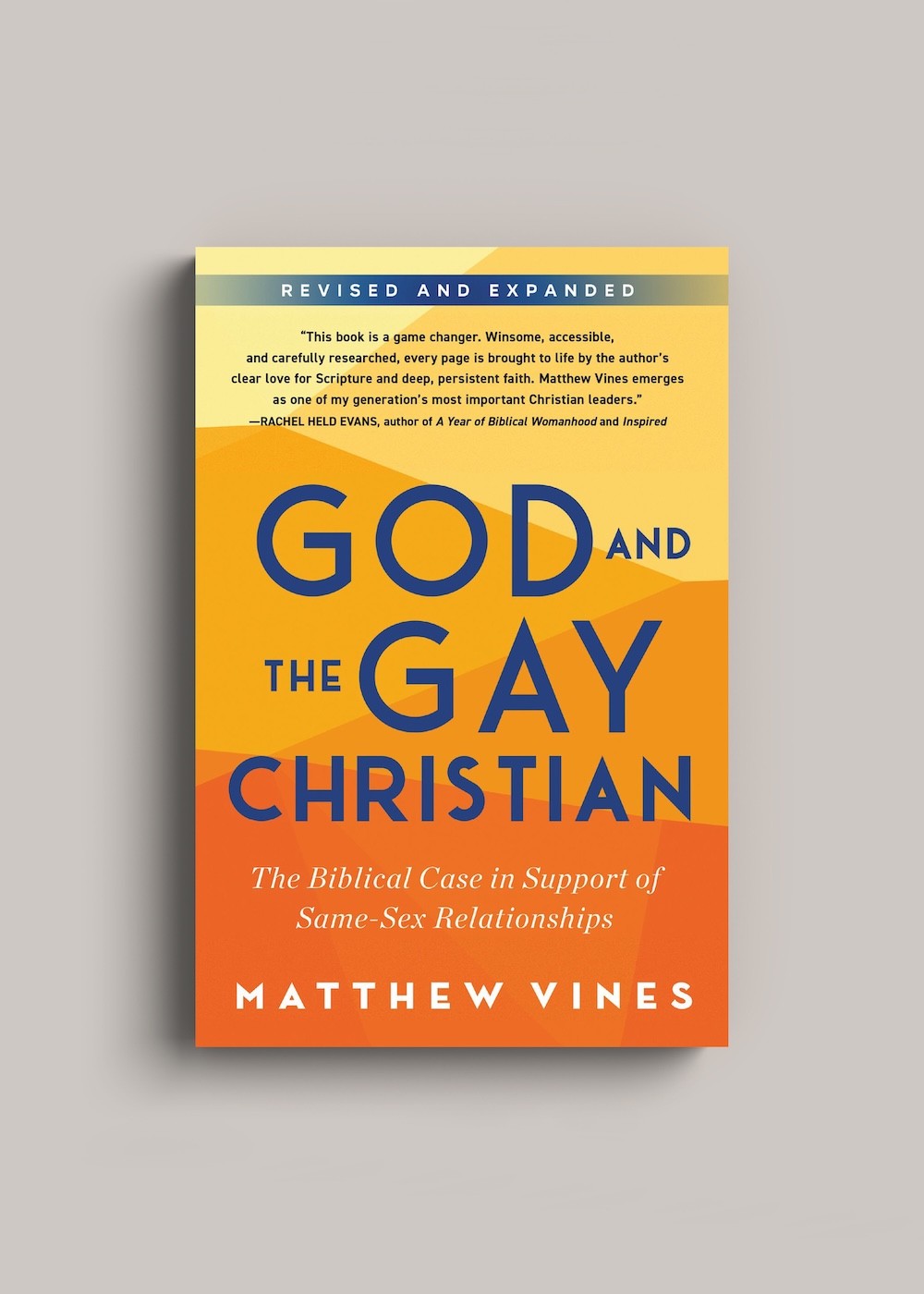
God and the Gay Christian — Matthew Vines
Matthew Vines
Matthew VinesAuthor & Founder
Recommended Reading

Chapter 9 of God and the Gay Christian

In the revised and expanded edition, Matthew Vines examines the redemptive arc of Scripture — and why the same hermeneutic that drove the church to affirm the full humanity of enslaved people and women points toward the inclusion of gay Christians today. Available wherever books are sold.

Find the book →
Common question

Is there any explicit support for applying a redemptive-movement hermeneutic to questions related to gender and sexuality, though?

  • Yes. In the Old Testament, those who were sexually different — like eunuchs and barren women — were actually barred from entering the assembly of the Lord (see Deuteronomy 23:1). This was because God extended his blessings to Israel primarily through biological procreation under the old covenant. Consequently, celibacy and infertility were both heavily stigmatized.

  • But Christ's life, death, and resurrection upended that status quo. Now, anyone can become part of God's family simply through personal faith. Rather than being born into God's people through procreation, we are now called to be born again through faith in Christ (John 3:3).

  • That change had major consequences. Now, eunuchs and barren women are fully embraced in the community of believers. As Isaiah prophesied, "Sing, barren woman, you who never bore a child; burst into song, shout for joy, you who were never in labor; because more are the children of the desolate woman than of her who has a husband" (Isaiah 54:1).

  • In fact, one of the first Gentile converts to Christianity was an Ethiopian eunuch (see Acts 8:26–39), fulfilling these words of Isaiah:

Isaiah 56:4–5
Scripture's Trajectory on Gender & Sexuality

Within the text of Scripture itself, we see greater inclusion of those who had been excluded based on their inability to procreate.

Old Covenant
Deuteronomy 23:1

Eunuchs and barren women were barred from entering the assembly of the Lord. God's blessings flowed through biological procreation; celibacy and infertility were heavily stigmatized.

New Covenant
Acts 8:26–39 · Isaiah 56:4–5

One of the first Gentile converts was an Ethiopian eunuch. Anyone can become part of God's family through personal faith. Those previously excluded are fully embraced.

Philip baptised the Ethiopian eunuch in Acts 8:26–39. Within the text of Scripture itself, we see greater inclusion of those who had been excluded based on their inability to procreate.

Common question

So does that mean that Scripture explicitly affirms LGBTQ people or says it's okay to be gay, bi, or transgender?

  • No. There are no LGBTQ-identified people in Scripture. Given the vast cultural distance between understandings of same-sex behavior then and now, it's misguided to try to "discover" explicit affirmations of same-sex couples or LGBTQ people in the Bible. (For example, some point to David and Jonathan, Ruth and Naomi, or the Roman centurion and his slave, but none of those examples corresponds closely to what we're discussing today.)

  • Even though eunuchs don't neatly correspond to modern identity categories like "gay" or "trans," the inclusion of those in Scripture who had previously been excluded due to their inability to procreate offers an important precedent for the inclusion of those in the church today whose covenantal partnerships are likewise non-procreative.

The same Spirit that moved the church toward the abolition of slavery is moving the church today toward the full inclusion of gay, bisexual, and transgender believers — because the arc of Scripture bends toward inclusion.